American Peony Society Awards
Recognition of the Best in Peonies
Honoring Quality in Peonies and People
Values that show through in our awards
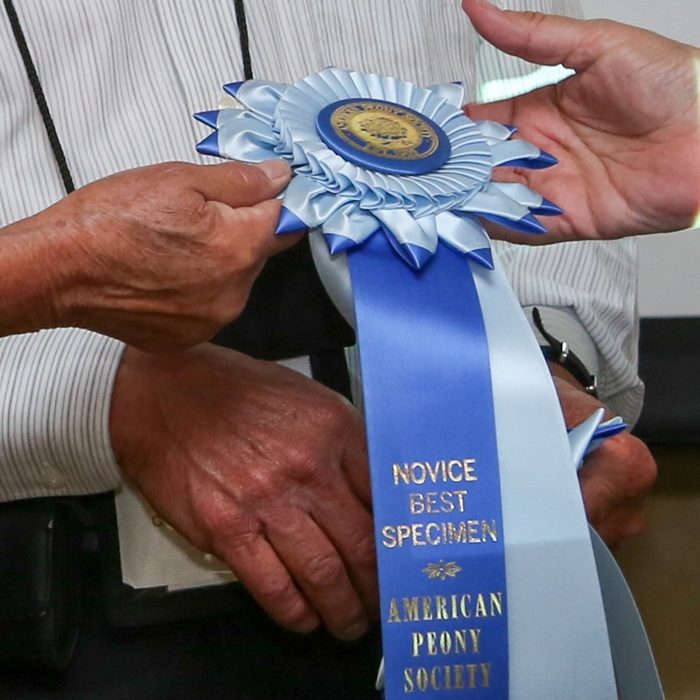 The American Peony Society has numerous peony related awards, which have been developed and promoted over the past 100 years in support of the peony. These awards serve to recognize not only outstanding peony flowers and plants, but the people that have been important to this lovely plant.
The “Gold Medal” is awarded annually for peonies exhibiting outstanding floral qualities and in recent years has also been designated “Peony of the Year.” These peonies are excellent for gardeners wishing to have plants that produce outstanding flowers for use as cut flowers, arranging or simple visual enjoyment.
Personal awards are given to American Peony Society members that have given of themselves to promote the peony in a variety of ways. Awardees include hybridizers, APS Board members, Growers, peony ambassadors, authors and a wide variety of other personalities important to the peony world.
Award of Landscape Merit peonies are recognized for their excellence of plant habit in the landscape. Peonies with this award designation are stellar performers and superior garden plants.
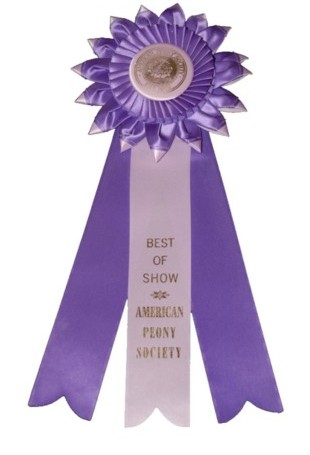
Best in Show and Exhibition awards are given to flowers shown at the annual American Peony Society’s Flower Show which is held in conjunction with the convention. An array of awards are given at this event, but the most coveted award is Grand Champion, representing best in show. To get a healthy taste of the wide range of peony flower colors and forms, this is a “CAN’T MISS” event!
The awarded peonies are a small slice of excellent peonies that may be available today, but there are many more. Watch for the next additions to the American Peony Society’s Awarded Peony listings.
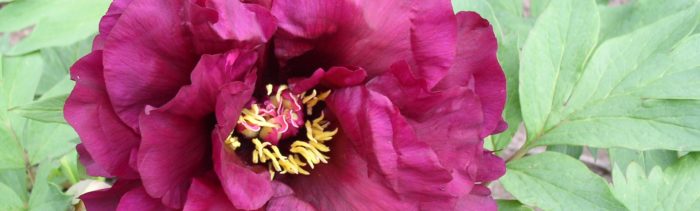
Woody Peony ‘Hephestos’. A Gold Medal and Best in Show Winner.
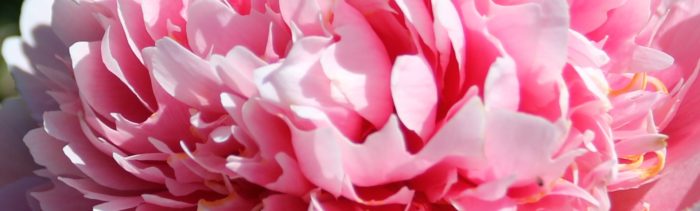
Herbaceous Hybrid ‘Etched Salmon’ is the recipient of the Award of Landscape Merit and Gold Medal.
Additional Resources
American Peony Society Annual Show Results
Honoring the Best in Peony Flower Showmanship
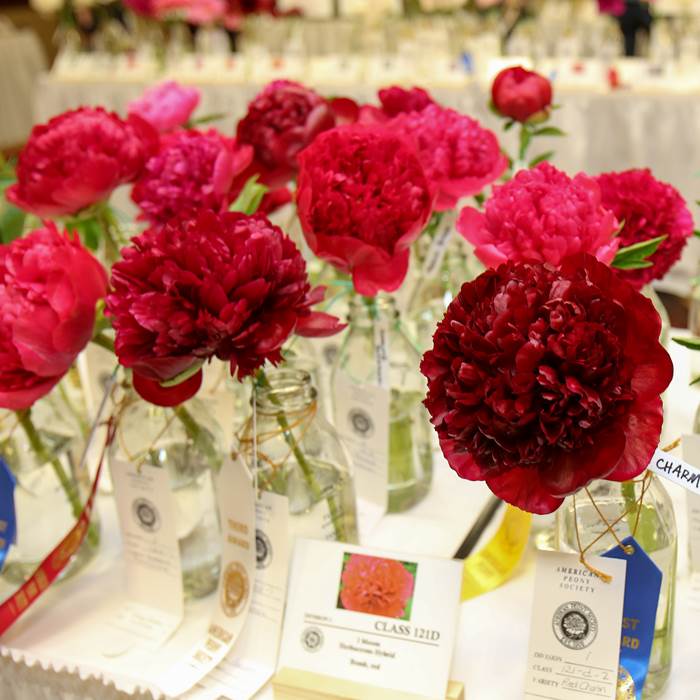 Each year exhibitors trek to the American Peony Society’s Annual Flower Show and Exhibition to present their finest blooms for evaluation by a team of judges. While peony flowers are generally beautiful, showing them to perfection requires time, effort, skill and sometimes a little luck. Many variables are involved in creating the best presentation of a single flower which may include: a well formed flower, appropriate size, pristine condition, correct maturity, color, petal configuration, and preparation for judging. Of course growing a healthy plant plays a part in the entire production of perfect blooms.
Many flowers each year receive ribbons in recognition of excellent showmanship. Visitors to the Flower Show and Exhibition are treated to the final results by seeing hundreds of blooms prepared to perfection. We hope you are inspired viewing the entries since it is APS goal to enrich everyone lives through plants and in this case the enchanting peony flower.
APS wishes to thank and honor those who show the fruits of their efforts and hope others join in this unique activity. Take a look at the results, much can be learned about best cultivars for showing, the people who show and other entry information. Please see the resource block below for specific annual show results.
APS Peony Exhibition Results
Best in Show and Exhibitions
Beauty, Competition, Education-A Many Faceted Event
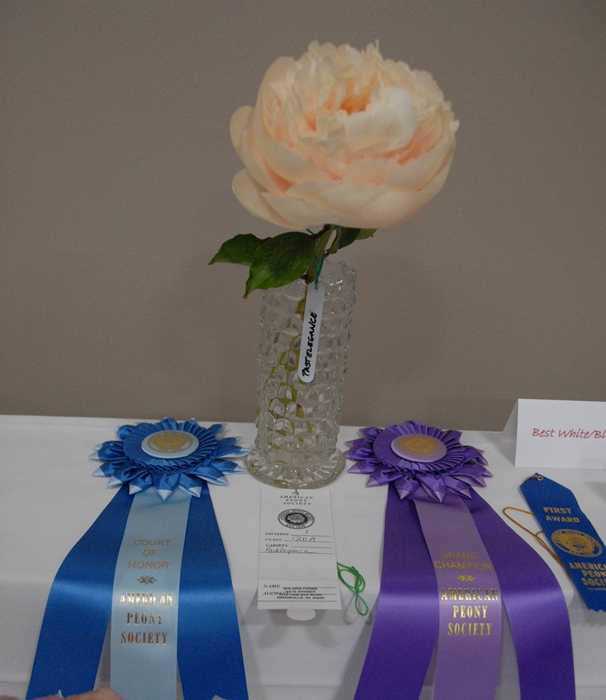
Herbaceous Hybrid ‘Pastelegance’
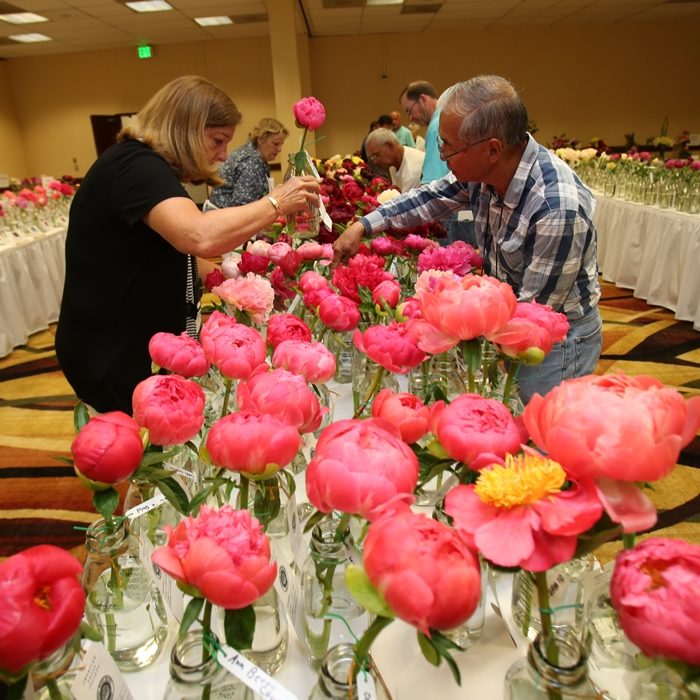
Each year the American Peony Society sponsors and organizes a peony flower exhibition, in conjunction with the annual convention. Growers, gardeners and peony enthusiast gather to have their best flowers evaluated and viewed by the public during the show. Flowers from a wide range of peony plant groups can typically be seen, as well as blooms from some of the newest and most unique introductions. Exhibitors bring their flowers from many locations in North America, allowing show visitors to view many different peony cultivars at one time, though in their own gardens they may bloom weeks apart.
With great anticipation and excitement, the exhibitors prepare their flowers for judging the evening before judging. Judges evaluate each bloom in various divisions and award worthy flowers that meet definitive criteria. The best flowers from each division are selected and further awarded, and further selections are made to determine a number of other awards.
The Court of Honor contains the best from each class group regardless of Schedule Division. Thus it is made up of the best of the best, and it is from the Court of Honor that the ultimate “best of the best” is selected to be the Grand Champion of the show. This award is the highest honor a peony can receive in our annual flower exhibition.
To receive the Best In Show award, a peony must receive a 1st place award in its exhibited class of those classes presenting single blooms. Judges then select from all of the 1st place winners of the single bloom classes for representation on the Court of Honor. The Court of Honor will consist of winners according to color and type (Lactiflora, Hybrid, Itoh Group, Suffruticosa, Lutea Hybrid). The Court of Honor is then evaluated to determine the single flower representing the most outstanding judged show qualities.
Preparing For Exhibition
Additional Resources
Addtional Resources
Memorial Awards for Court of Honor Selections
♥ William Seidl…Best Lutea Hybrid
♥ Allan Rogers…Best Herbaceous Hybrid
♥ Ben Gowen…Best Double lactiflora
American Peony Society’s Gold Medal
Peony of the Year, Flower Par Excellence
The American Peony Society, by way of awarding medals and certificates, has long recognized exceptional peonies. In this scheme of things the Gold Medal has always been considered the ultimate accolade, but as the Society and the interest in peonies have evolved, so too have the criteria by which these medals were awarded. Today, the American Peony Society selects the ‘Gold Medal’ peony for flower beauty and consistency, as well as, commercial availability and market price.
The APS, by way of the Gold Medal, recommends plants on the Additional Resources list ‘Gold Medal Peonies’ as beautiful additions for the garden, display, cut flower arrangement and exhibition. These are truly some of the finest all round peonies to be found for the general public.♥
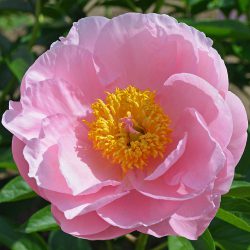
‘Dreamtime’ 2024 Gold Medal Announcement and Information: HERE
Additional Resources
Submit a Gold Medal Peony Nomination
American Peony Society’s Award of Landscape Merit
Free Standing and Reliable Beauties For the Landscape
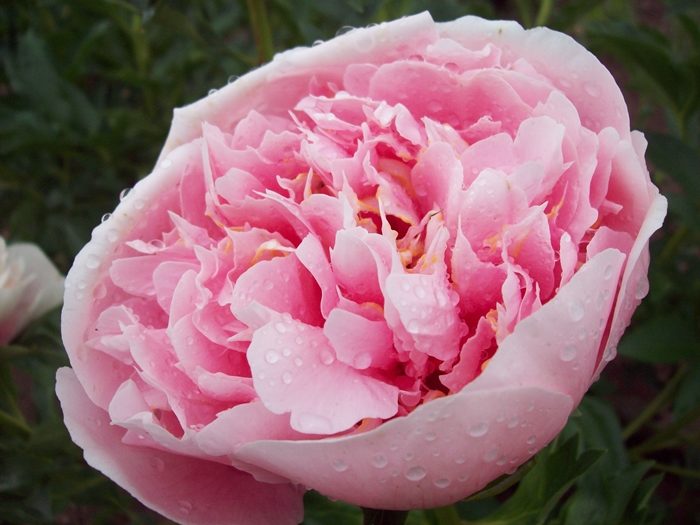
Herbaceous Hybrid ‘Etched Salmon’
Peony cultivars bestowed this award are chosen for superior ornamental value, overall appearance in the landscape throughout the growing season, and reliable performance across North America. Plants are required to be self-supporting in wide ranging weather conditions and reliably display their flowers. Special attention is given to foliage quality throughout the growing season. ALM peonies should provide gardeners and landscapers with superior plants that can be expected to demonstrate excellence in the landscape. See Additional Resources below for a full listing and images of the Award of Landscape Merit winning peonies.
Woody peonies (tree) are not considered for this award, due to their free standing habits. While not all woody peonies would be considered good candidates for landscaping, the vast majority are acceptable for this purpose.
Award of Landscape Merit committee contact: [email protected]
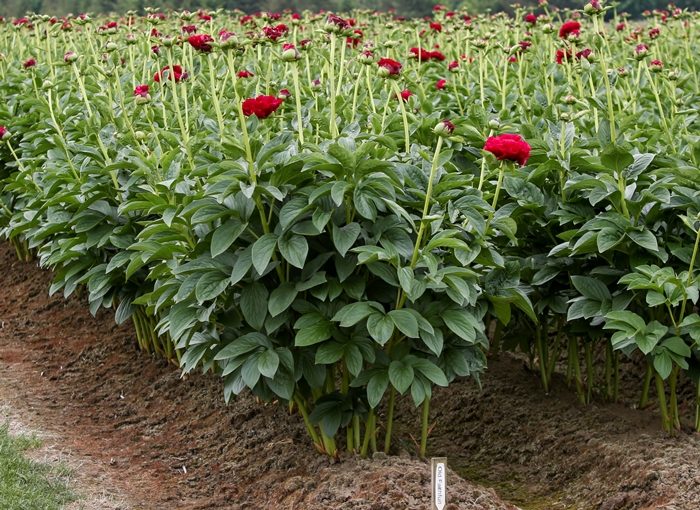
Herbaceous Hybrid ‘Old Faithful’ Demonstrating Outstanding Foliage and Upright Stance
Additional Resources
Recognizing Contributors to the American Peony Society
Honoring Members That Gave Freely of Their Time, Talents and Good Will
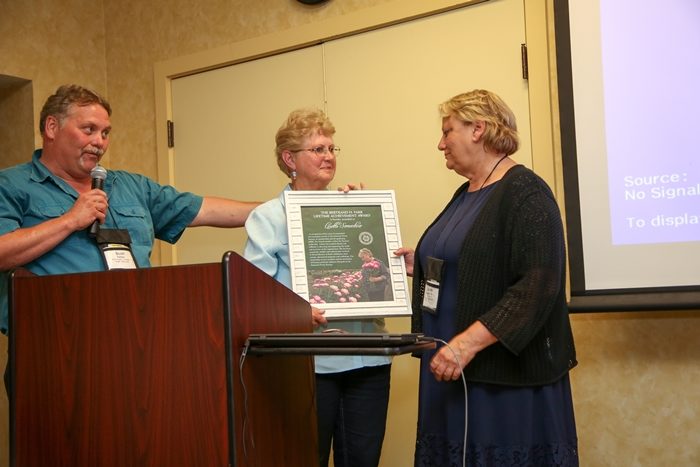
Linette Sorrentino Receiving the ‘Bertrand H. Farr’ Award Lifetime Achievement Award in 2019.
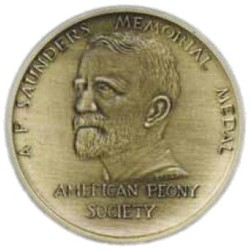
A.P. Saunders Memorial Medal
Personal awards are given to American Peony Society members who have given of themselves to promote the peony in a variety of ways. Awardees include hybridizers, APS Board members, growers, peony ambassadors, authors and other personalities important to the peony world.
The American Peony Society has awarded several types of personal awards, medals, and plaques including the A.P. Saunders Memorial Medal, the American Peony Society Medal, the American Peony Society Board of Directors Service Award, and the Bertrand H. Farr Lifetime Achievement Award. For further information and to nominate a deserving member or peony contributor click here: Personal Awards Nominations.
Ground breaking hybridizers are often recognized for their efforts with the A.P. Saunders Memorial Medal. The award is named in honor A.P. Saunders, the first hybridizer to undertake an extensive hybridizing program that produced outstanding cultivars, many of which are still popular today, and many of which still form the basis of current hybridizing programs. Awardees may also have contributed to the peony world through other notable activities.
The Bertrand H. Farr Lifetime Achievement Award is given to members that have contributed to the society and peony world in numerous ways. Authors, growers, ambassadors, organizers and leadership are among the many attributes recognized for this prestigious award.
American Peony Society Board members may be recognized for their meritorious work through the American Peony Society BOD Service Award.
Other awards exist which are dependent upon efforts and support given during a period of time. The American Peony Society is thankful for past support and the hard working individuals that continue to move the peony world forward.
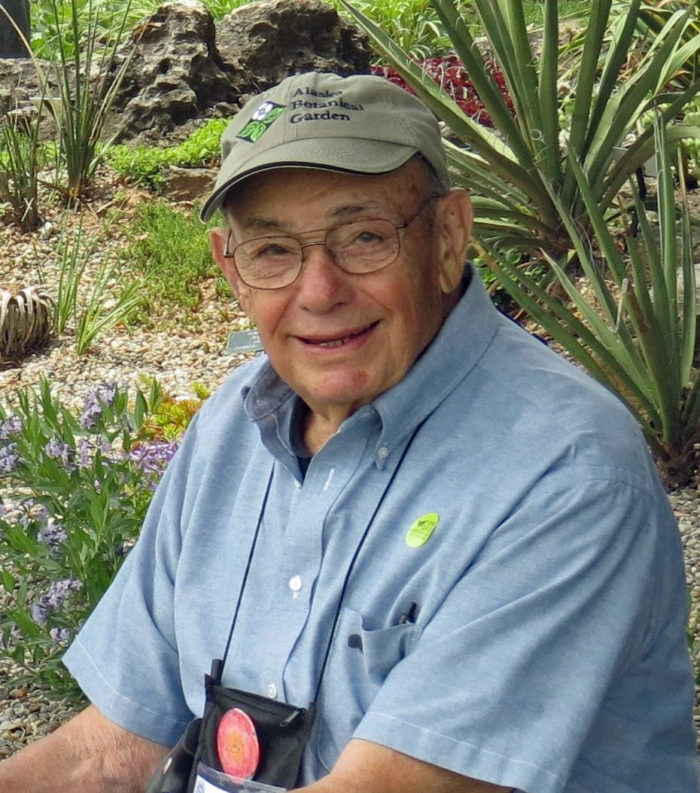
Don Hollingsworth Recipient of A.P. Saunders Memorial Medal and Bertrand H. Farr Lifetime Achievement Award.
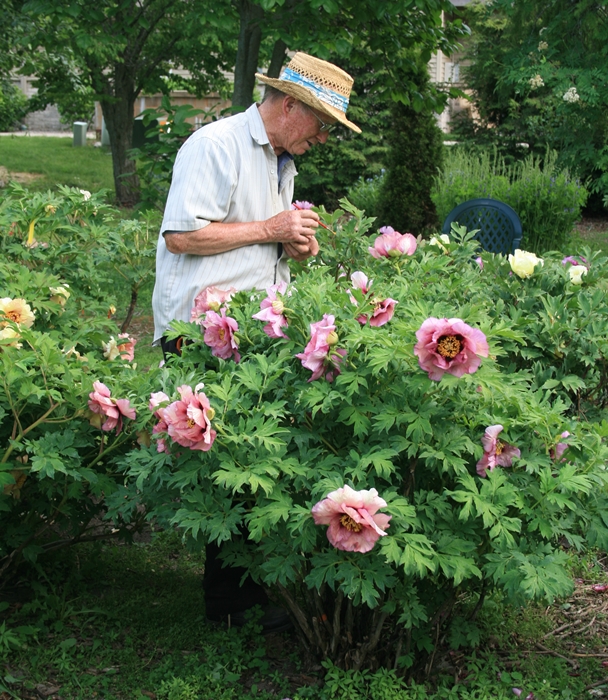
William Seidl Recipient of the A.P. Saunders Memorial Medal